- Home
St Paul’s Cathedral:
In Sir Christopher Wren’s grand rebuilding of St Paul’s Cathedral after
the Great Fire of London, Jean Tijou’s artistry was enlisted to adorn the new interior with
magnificent wrought ironwork. Over the course of two decades, Tijou crafted elegant
screens and grilles for the cathedral – including the exquisite choir railings and chancel
gates – which harmonized with Wren’s classical design. These pieces showcase a
restrained refinement in Tijou’s style, emphasizing flowing scrollwork that complements
the sacred architecture. The result was an understated yet sublime set of ironwork
features that integrated seamlessly into the cathedral’s awe-inspiring interior.
Hampton Court Palace:
At Hampton Court Palace, Tijou achieved perhaps his most
celebrated work: the ornate wrought iron screens that border the Privy Garden along the
River Thames. Commissioned by William III and Mary II and completed around 1700, the
monumental Tijou Screen consists of twelve flamboyantly decorated panels, richly
embellished with royal crests, gilded foliage, and mythical creatures. This expansive
screen forms a grand Baroque backdrop to the formal gardens and is considered a
pinnacle of decorative ironwork. Tijou’s touch at Hampton Court also extended indoors –
the King’s Staircase boasts an intricate iron balustrade he designed, which perfectly
complements the staircase’s painted ceiling and the palace’s overall splendor.
Chatsworth House:
Chatsworth House in Derbyshire, the stately home of the Dukes of
Devonshire, also bears the hallmark of Jean Tijou’s workmanship. The mansion’s
magnificent Great Stairs are lined with a gilded wrought iron balustrade crafted by Tijou,
whose delicate scrolls and leaf motifs catch the light beneath the Painted Hall’s grand
murals. Tijou additionally created an elaborate set of “Golden Gates” for Chatsworth – an
ornate pair of wrought iron gates originally made for the estate in the late 17th century.
These gates, later relocated to the north entrance of the park, now greet visitors with a
dazzling display of Tijou’s Baroque style. Together, the staircase balustrade and the
Golden Gates exemplify how Tijou’s elaborate designs enhanced both the interiors and the
landscape of this great country house.
Drayton House:
At Drayton House, an historic manor in Northamptonshire, one finds
some of the finest country-house ironwork attributed to Jean Tijou. The estate’s gardens
are enclosed by ornate wrought iron screens and gates dating from around 1700, whose
intricate design and craftsmanship strongly suggest Tijou’s hand. Scrolling acanthus
leaves, delicate floral motifs, and remnants of gilded details make these garden railings a
Baroque spectacle in miniature. Likely commissioned by Drayton’s owners to bring royal-
style grandeur to their home, the ironwork here stands as a delightful example of Tijou’s
influence beyond the major palaces – a rare survival of his artistry gracing a private garden.
Burghley House:
Burghley House in Lincolnshire features a spectacular set of late-17th-
century gates designed by Jean Tijou. This grand pair of wrought iron gates, lavishly
adorned with gilded scrollwork and copper-leaf details, was part of the opulent
improvements made for John, 5th Earl of Exeter. Installed as a dramatic entrance within
Burghley’s cour d’honneur, the Tijou gates would originally have gleamed with gold against
the stone façades – they were even gilded by the same master gilder who worked on the
house’s baroque painted ceilings. Painstakingly restored in modern times, these gates
continue to welcome visitors with a golden flourish, standing as a testament to Tijou’s
unparalleled skill in turning iron into art.
Kensington Palace:
Kensington Palace, the elegant London residence of William III and
Mary II, is graced by ornamental ironwork attributed to Jean Tijou. Foremost among these
works is the set of gilded palace gates at the south front – a grand decorative screen
marking the entrance to the royal gardens. Their intricate design, rich with intertwined
monograms, crowns, and curling foliage, reflects the same opulence Tijou brought to
Hampton Court. Blending utility with beauty, the gates at Kensington not only served a
practical purpose but also proclaimed the monarchs’ refined taste, transforming an
entrance into a stately Baroque artwork in its own right. 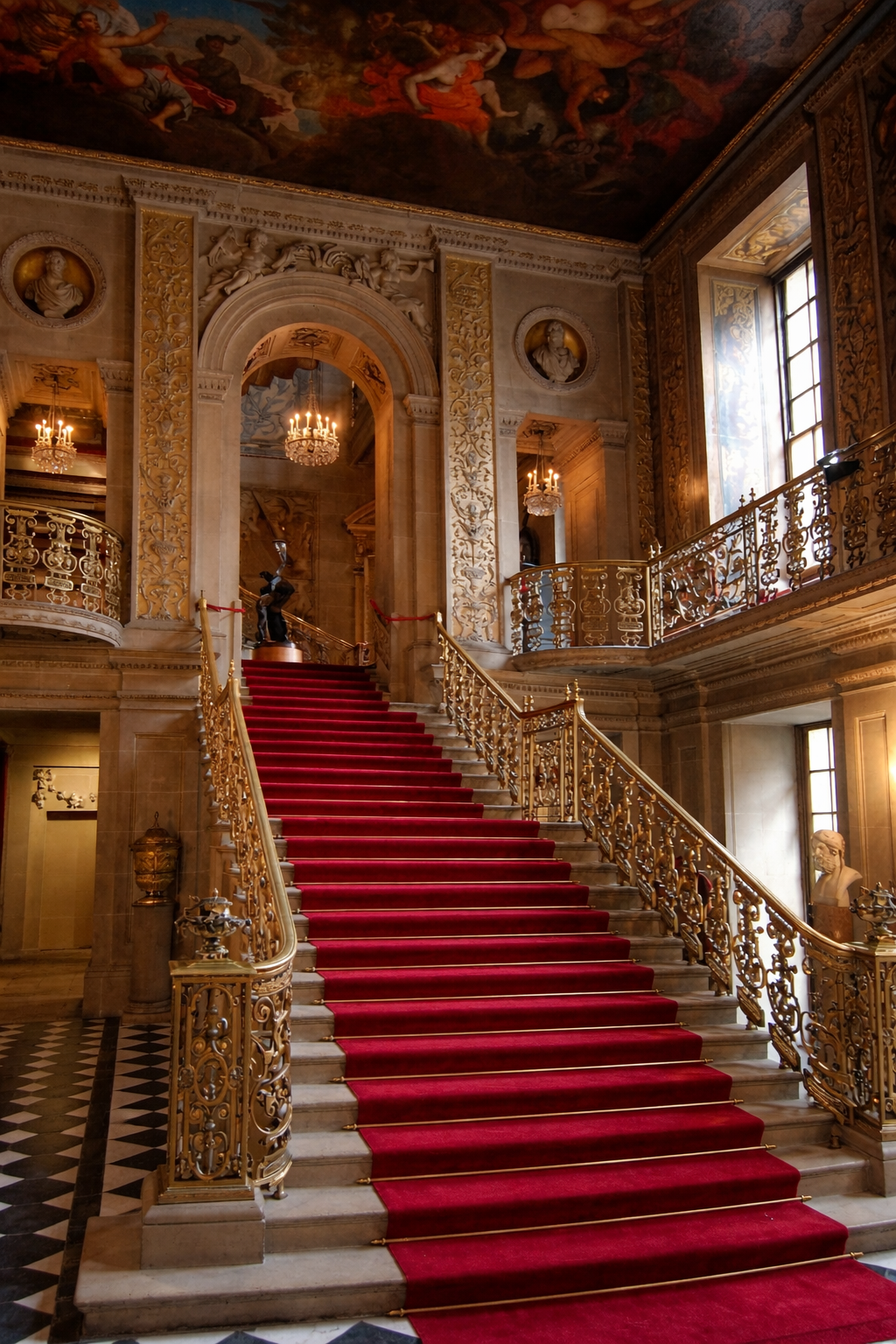
Windsor Castle:
Windsor Castle, another principal royal residence of the era, also
benefited from Tijou’s ironworking genius. During the late 17th-century refurbishment of
the castle, ornate wrought iron elements attributed to Tijou were installed to enhance the
state apartments and grounds. He is believed to have crafted decorative grilles and
screens for the castle – pieces that would have blended strength with lavish detail,
perfectly complementing Windsor’s baroque interiors and gardens under William III’s
reign. Although less famous than his work at Hampton Court or St Paul’s, Tijou’s
contributions to Windsor Castle underscored that his talents were employed at virtually
every key royal site of the time.
London Private Townhouses:
Beyond palaces and great estates, Jean Tijou’s
craftsmanship also found its way into the grand private townhouses of late 17th-century
London. Wealthy nobles and merchants commissioned Tijou to create bespoke ironwork
accents for their city residences – from elegant balcony railings and window grilles to richly
detailed stairway balustrades and entrance gates. These custom pieces brought a touch of
royal grandeur into private homes, showcasing Tijou’s ability to scale his elaborate designs
to more intimate settings. The presence of a Tijou ironwork installation became a status
symbol in London, marrying French Baroque flair with English urban sophistication in the
heart of the city.
A New Book of Drawings (1693):
In 1693, Jean Tijou published A New Book of Drawings, a seminal collection of his ironwork designs that would greatly influence decorative
metalwork in Britain. This folio presented twenty exquisitely engraved plates illustrating Tijou’s most imaginative gates, screens, and ornamental patterns. As the first book of its kind in England, it effectively showcased Tijou’s mastery to patrons and craftsmen alike,
setting a new standard for design in wrought iron. The fine quality of the engravings –detailing everything from scrolling foliage and floral arabesques to heraldic and
mythological figures highlighted the artistry of his work. Tijou’s Book of Drawings not only preserved his designs for posterity but also served as an inspiration and practical guide for generations of ironworkers to follow, securing his legacy as the era’s preeminent master of decorative ironwork.